

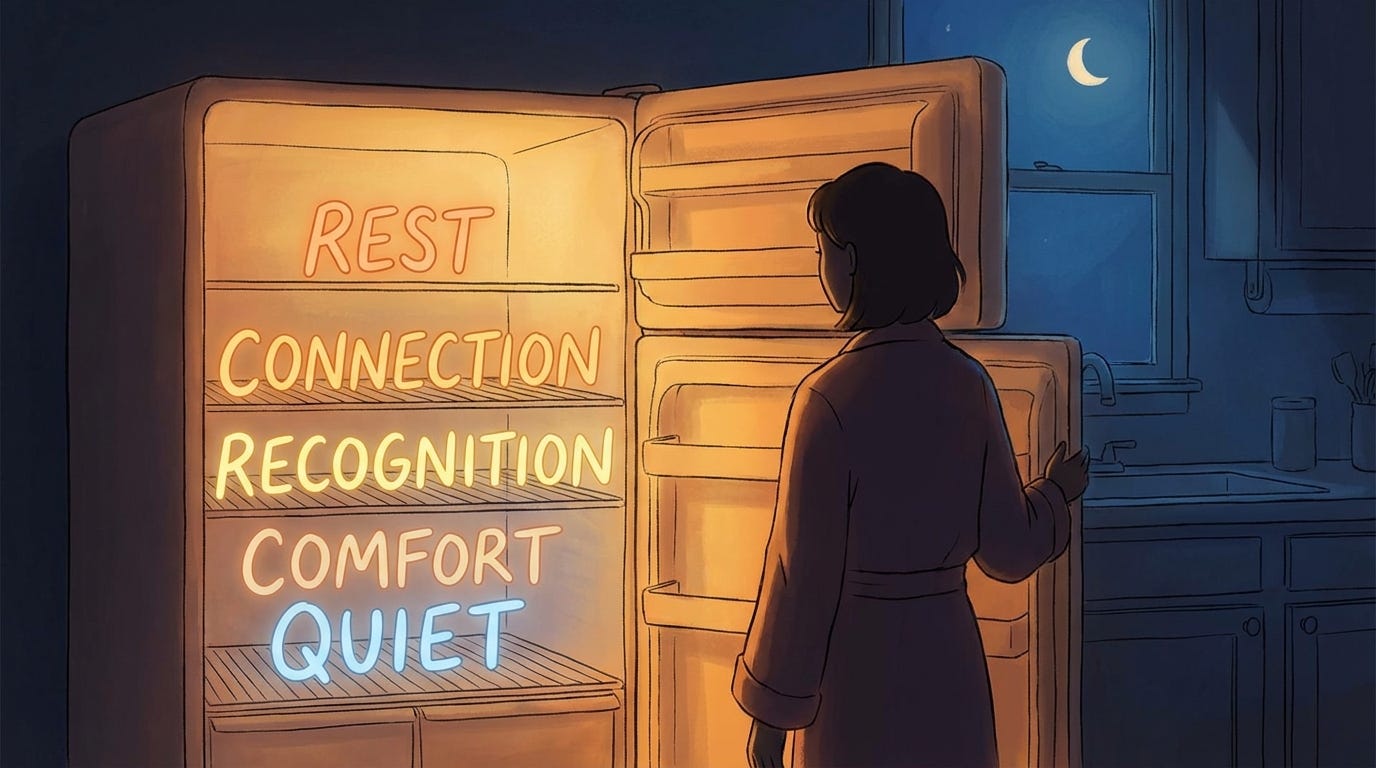
You say you want the shoes. But what if the shoes are standing in for something else entirely? What if “I need a treat” is actually code for “I’m exhausted, and nobody seems to notice”? What if the shopping spree after a brutal week is your mind reaching for rest, recognition, or relief, and the store is just the only translator it knows how to use?
The purchase is almost never about the purchase. Understanding what you’re actually hungry for changes everything.
The Need Behind the Want
Psychologists Edward Deci and Richard Ryan spent decades studying what human beings need to function well, and they landed on three core psychological needs: autonomy (feeling like you have some control over your own life), competence (feeling capable and effective at things that matter), and relatedness (feeling connected to other people in a real way).
When those needs go unmet, we look for substitutes. And shopping can impersonate all three surprisingly well. Choosing what to buy feels like a sense of autonomy. Being able to afford it feels like a sign of competence. Having nice things feels like belonging.
But it’s a counterfeit version of each one. You get the feeling for a little while without the need actually being met. Then the need comes back, and it’s hungrier than before because it still hasn’t been fed.
Research in consumer psychology consistently shows that unmet psychological needs predict emotional spending more strongly than income level does. It’s not about how much money you have. It’s about what’s missing underneath.
A Translation Guide
This is where things get personal. Here are some of the most common reward-spending phrases and what they might actually be signaling when you slow down enough to listen.
When you catch yourself thinking, “I worked hard, I should treat myself,” there’s a good chance you actually need rest, recognition, or just a sense that the effort you’re putting in matters to someone.
When the thought is “I need a pick-me-up,” the need underneath is often connection, comfort, or relief from something you’ve been carrying around without talking about it.
“I’ve been so good lately” tends to signal a need for permission to be imperfect, or some freedom from the feeling that your life is all restriction and no breathing room.
“I just want something that’s for me” often points to a need for autonomy, for expressing identity, or simply for someone to pay attention to what you want, for a change.
“I earned this” is frequently a hunger for acknowledgment, either from yourself or from someone else who sees what you’ve been doing.
And “it’s been such a hard week” is almost always a need for care, gentleness, or actual help with the hard thing rather than a distraction from it.
None of these needs is shameful. Every single one is valid and human. But purchases satisfy them for about as long as a handful of chips satisfies real hunger. There’s a brief moment of comfort, and then it fades, sometimes with a crash. The question worth sitting with is: how do you actually feed what’s hungry?
Why Shopping Wins (At First)
It’s worth understanding why shopping feels like such a natural answer, even when it doesn’t really solve anything. Shopping is immediate. It’s controllable. It’s socially acceptable. It doesn’t require vulnerability or awkward conversations. You don’t have to ask anyone for help, and you can do it at 11pm in your pajamas without explaining yourself. It comes with a little dopamine hit that makes the whole thing feel like progress.
Shopping is basically the vending machine of emotional needs. Not nutritious, but incredibly convenient.
By contrast, actually meeting those deeper needs often requires time, risk, other people, or uncomfortable honesty with yourself. Asking for recognition means admitting you need it. Resting means accepting that you can’t keep running at this pace. Connecting with someone means being a little bit vulnerable. Of course, shopping wins the convenience competition. But convenience and satisfaction are not the same; research bears this out: emotional purchases are regretted at three times the rate of planned purchases.
The quick fix almost always costs more than it gives.
From Substitution to Satisfaction
The point of all this isn’t to make you feel bad about using shopping as a stand-in for unmet needs. Over half of Americans say they prefer retail therapy over actual therapy when dealing with stress. This is incredibly common, and it makes complete sense given how our brains work.
The goal is to become a little more fluent in your own needs, so that when the reward urge shows up, you have more than one option available.
When you feel that pull to treat yourself, pause long enough to translate. What just happened before this urge arrived? What am I actually hungry for right now? Is there any way to meet that need more directly?
Sometimes the answer is no, and the purchase is fine. But more often than you’d expect, once you name the real need out loud, you realize there’s a truer path to meeting it. One that doesn’t leave you feeling empty again an hour later.
This Week’s Practice
Try this simple translation exercise. Before your next reward purchase, write one sentence: “I want to buy [this thing] because I’m feeling [this way].” Then ask yourself: what would actually address the feeling?
Maybe it’s the purchase. But maybe it’s a nap, a real conversation with someone who gets it, saying no to something you’ve been dreading, or just asking for help you’ve been too stubborn to request. Start building your own personal translation dictionary, one entry at a time.
In the final post of this series, we’ll design a reward system that actually works, one that meets your real needs without undoing your progress.