

We’ve spent several posts discussing financial avoidance as a problem, and it often is.
But sometimes, stepping back from your finances is exactly the right move.
Not all avoidance is created equal. Learning to tell the difference is part of building a healthier relationship with money.
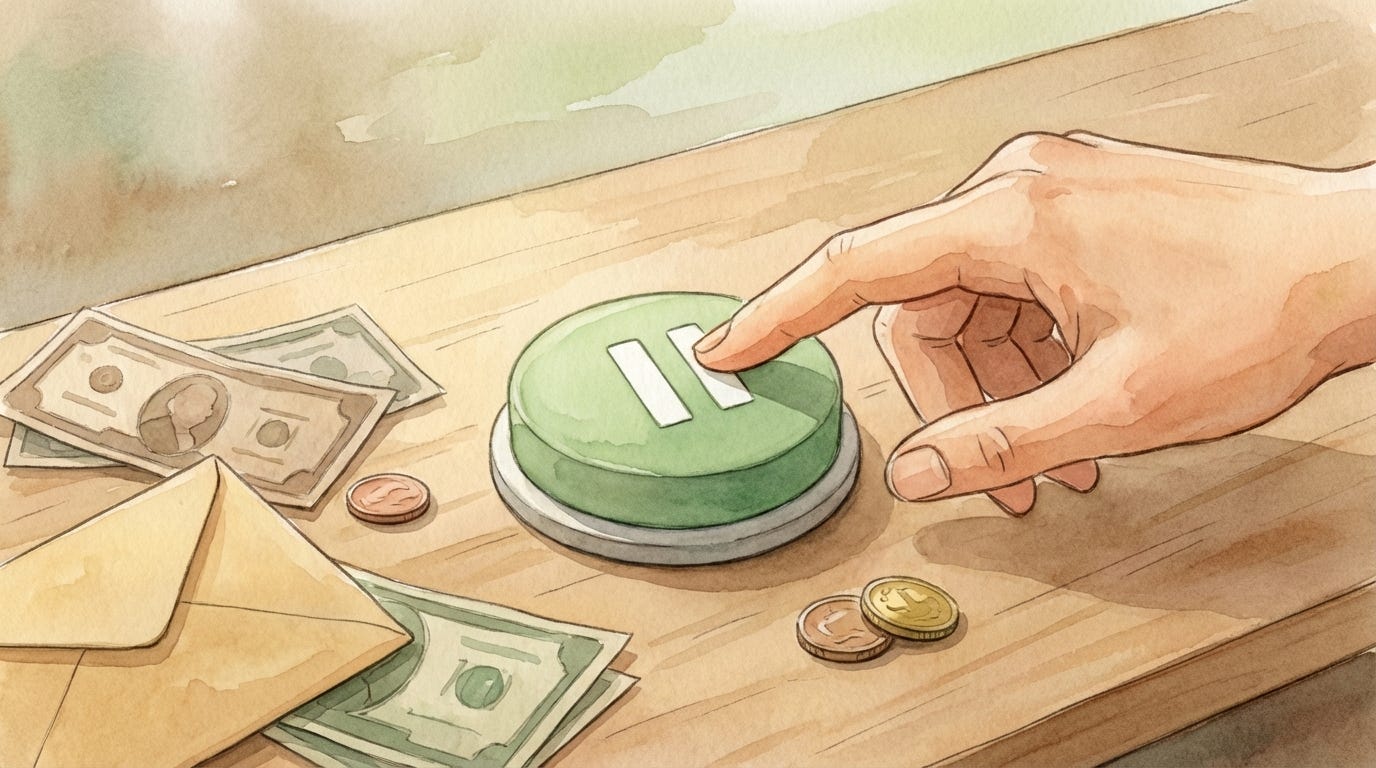
Two Kinds of Stepping Back
There’s a difference between avoidance that protects you and avoidance that traps you.
Protective avoidance is strategic. It’s temporary and chosen. You step back because you need to, and you know you’ll step forward again when you’re ready.
Harmful avoidance is reactive. It’s chronic and automatic. You step back because you’re scared, and that only makes things worse.
Same behavior on the surface. Very different underneath.
When Avoidance Makes Sense
Here are some times when not engaging with your finances might actually be wise:
During a crisis. If you lost your job, got a scary diagnosis, or are dealing with a family emergency, now might not be the time to overhaul your budget. Survival mode is real. Sometimes the most financially responsible thing you can do is keep the lights on and deal with the rest later.
When nothing can change right now. Checking your investment account daily during a market crash doesn’t help. The numbers move whether you watch or not. If looking only increases your anxiety without giving you actionable information, stepping back can be healthy.
When you’re in recovery. If you just took a big financial step—faced a hard number, had a difficult money conversation, made a painful decision—you might need time to recover before the next one. Rest is part of the process.
When you’re actively protecting your mental health. If you’re in a depressive episode or managing acute anxiety, adding financial stress to the pile might do more harm than good. Sometimes stabilizing yourself comes first.
The key in all these cases: you’re making a conscious choice to step back temporarily, with a rough sense of when you’ll re-engage.
Warning Signs It’s Harmful
How do you know when avoidance has crossed the line? A few signals:
Concrete consequences are piling up. Late fees. Missed deadlines. Calls from collectors. Opportunities slipping away. When avoidance starts costing you real money or real options, it’s no longer protecting you.
It’s been going on for a long time. A few days of not checking your accounts after a hard week? Reasonable. Six months of not opening any financial mail? That’s a pattern, not a pause.
The anxiety is growing, not shrinking. Protective avoidance should bring some relief. If the dread keeps building the longer you avoid, your brain isn’t getting a break—it’s marinating in fear.
You’ve lost flexibility. Healthy avoidance is a choice you can unmake. If the thought of engaging with your finances feels literally impossible—not just hard, but unthinkable—that’s a sign the avoidance has calcified into something stickier.
The Goal: Flexible Engagement
We want flexible engagement, not constant vigilance. You don’t need to check your accounts every hour or obsess over every transaction.
That means: you can look when you need to. You can step back when you need to. You move toward your finances or away from them based on what you need—not based on fear.
Some weeks, you might check in daily. Other weeks, you might take a break. Both can be healthy, depending on context.
The question isn’t “Am I avoiding?” The question is “Is this avoidance helping me or trapping me?”
A Quick Check-In
If you’re not sure which kind of avoidance you’re in, ask yourself:
Did I choose this, or did it just happen?
Do I have a rough sense of when I’ll re-engage?
Is this making things better or worse in concrete terms?
Does stepping back bring relief, or does the dread keep building?
No judgment in the answers. Just information.
What Now?
This is the last post in the series, so let’s bring it together.
You now know why your brain avoids financial information—it’s trying to protect you from a threat. You know the different flavors avoidance takes. You understand how shame keeps the cycle spinning. You have a ladder of tiny steps to start climbing when you’re ready.
And now you know that sometimes, stepping back is okay.
The path forward isn’t about forcing yourself to engage constantly. It’s about building the capacity to engage when it matters, and the wisdom to rest when you need to.
Start where you are. Take the smallest step you can. Be honest about what’s protecting you and what’s trapping you.
You’re not broken. You’re human. And humans can change—one tiny, boring, almost-too-easy step at a time.
This content is for educational purposes only and should not be construed as financial or therapeutic advice. Consider speaking with qualified professionals for personalized guidance.
Thanks for writing this, it clarifies a lot. Your disctinction between strategic and reactive stepping back is incredibly insightful, framing financial health as a process of dynamic system management. How do you envision an AI-driven app distinguishing between these two forms of avoidance efectively?