

What if you could feel just as rewarded, or even more so, without spending money? What if the best celebrations in your life turned out to be the ones that never showed up on a credit card statement?
This isn’t about deprivation. If you’ve followed this series from post one, you know we’re not interested in telling anyone to stop celebrating. This is about discovering that the rewards you buy are often weaker versions of rewards you could design intentionally.
Why Experiences Outlast Things
Researchers Thomas Gilovich and Leaf Van Boven have spent years studying a simple question: Does spending money on experiences make people happier than spending money on stuff? The answer, consistently, is yes, and it’s not even close.
Experiences create longer-lasting satisfaction for a few reasons. They become part of your personal story in a way that objects don’t. They generate anticipation beforehand and memories afterward. They’re harder to compare unfavorably, because nobody pulls up next to you and asks if your weekend hike was the premium version. And unlike that new jacket in your closet, experiences don’t quietly depreciate while your brain adapts them into the background.
Material rewards fade through adaptation, which we explored in the second post. Experiential rewards become part of who you are. So if you’re going to spend money on a celebration, shifting from things to experiences is already a significant upgrade. And, some of the most rewarding experiences don’t cost anything.
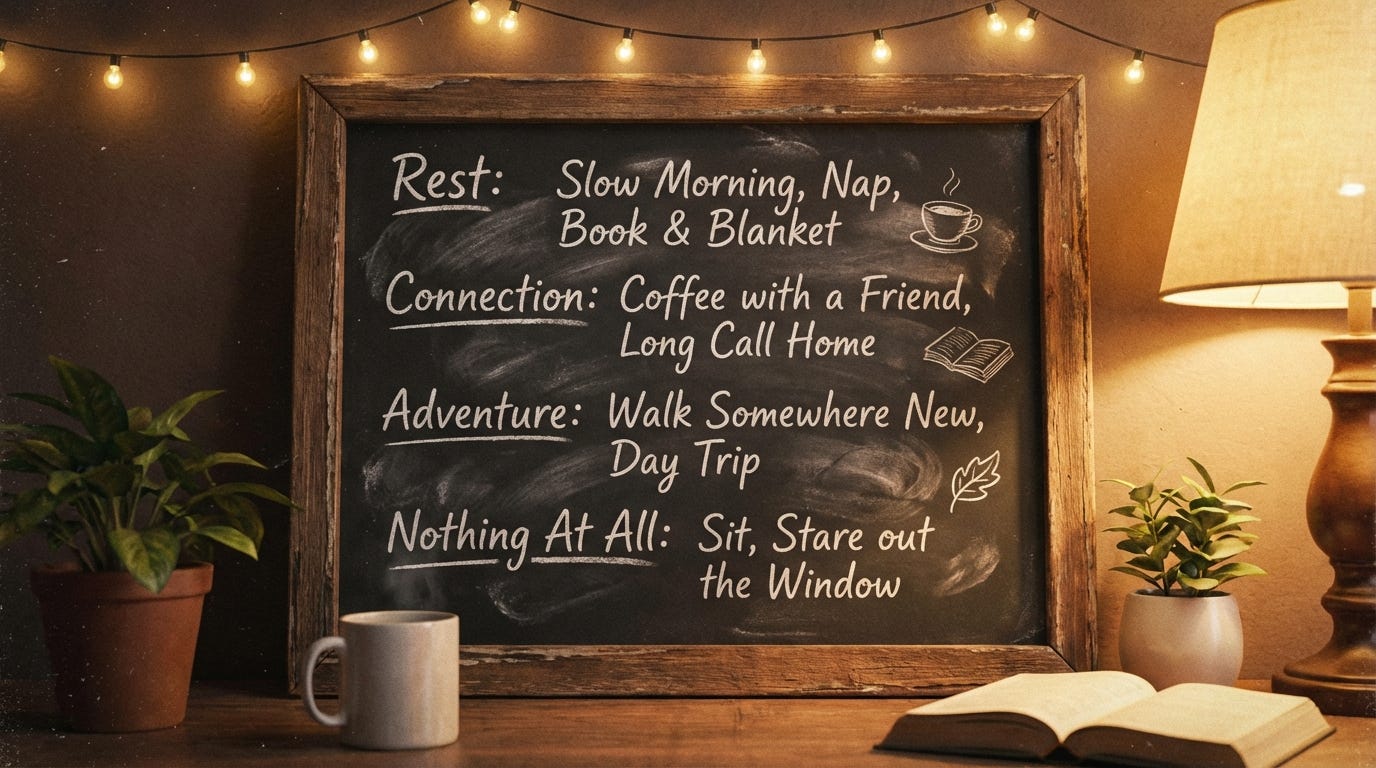
A Reward Menu Worth Having
In post four, we talked about the real needs hiding behind the urge to treat yourself. The key to building rewards that work is matching the reward to the need.
When you need a sense of control, try clearing an entire afternoon of obligations, saying no to something you’d normally agree to, choosing to do absolutely nothing productive for a set period of time, or rearranging a space in your home exactly the way you want it.
When you need to feel capable, consider tackling one thing you’ve been avoiding, not to finish it necessarily, but just to prove to yourself that you can start. You could teach someone something you know well, or go back and look at evidence of past wins, things like old photos, saved messages, or projects you completed that you’ve already forgotten about.
When you need connection, the reward might be a real conversation with someone who actually sees you, sharing a win with someone who will celebrate it, or asking for help you’ve been too proud to ask for. That last one sounds like the opposite of a reward until you feel the relief of finally letting someone in.
When you’re just depleted, the truest reward might be sleeping without setting an alarm, canceling something you were dreading (the relief itself is the reward), or doing something deliberately slow: a walk, a bath, a cup of tea, or nothing at all.
And when you’re craving stimulation, the thing shopping usually pretends to offer, try exploring somewhere you’ve never been, even a different grocery store or an unfamiliar neighborhood. Learn one new thing from a tutorial or conversation. Make something with your hands where the process matters more than the result.
The Anticipation Trick
Studies by Amit Kumar and others show that anticipation contributes more to happiness than the actual event. Shopping already exploits this, which is why browsing feels exciting and why 76% of people feel more excited about a package in transit than the item once it arrives.
But you can use that same anticipation on purpose. Plan a future experience and let yourself look forward to it. Put that free afternoon on your calendar and enjoy seeing it there every time you check your week.
The anticipation is free. It doesn’t adapt as fast as material purchases. And it doesn’t generate regret or clutter. You’re not giving up the dopamine. You’re pointing it toward something that won’t leave a hangover.
Building Your Own System
The difference between reacting to reward urges and designing a reward system comes down to a few steps. People who plan rewards in advance report roughly 40% higher satisfaction than those who give spontaneous rewards. Simply start by:
First, write down what you typically buy as rewards, and next to each one, note what need it’s actually trying to meet. Second, brainstorm two or three alternatives that meet the same need without spending. Third, pre-commit to your reward before the milestone arrives. “When I finish this project, I will [specific reward].” Decide while your head is clear, before the licensing effect from post one starts whispering.
Fourth, make your non-monetary rewards as easy to access as monetary ones. Remove friction, schedule them like real appointments, and treat them with the same seriousness you’d give a dinner reservation. And fifth, pay attention to how you feel afterward. Most people who try this notice that the intentional, non-monetary reward lasts longer because it meets the need rather than just temporarily covering it up.
This whole series has been about one idea. The desire for reward is healthy, human, and good. The mechanism we default to, spending money, often isn’t the best tool for the job. Not because spending is wrong, but because it usually doesn’t deliver what it promises.
Create your reward menu this week. Write down five or ten options that don’t involve spending, organized by the need they meet. Put the list somewhere you’ll see it. The next time that “I should treat myself” voice shows up, check the menu first. You might still choose the purchase, and that’s perfectly fine. But you’ll be choosing it instead of defaulting to it. And sometimes you’ll discover that what you actually wanted was rest, or acknowledgment, or a walk around the block, and the thing in your cart was just a translation error.
The celebration that truly honors your progress is one that meets your real needs, doesn’t fade into the background by next week, and leaves you feeling resourced instead of guilty. Here’s to building more of those.
This content is for educational purposes only and should not be construed as financial or therapeutic advice. Consider speaking with qualified professionals for personalized guidance.